Viki Geunes in Conversation: How Intuition Becomes the Cuisine of Zilte
Three Michelin stars, an unconventional career path and a culinary style that never confuses precision with rigidity: Viki Geunes speaks about patience, spices, salinity, culinary discipline and the moment when an idea becomes a true Zilte dish.
04 September 2026 · Alexandra Gorsche
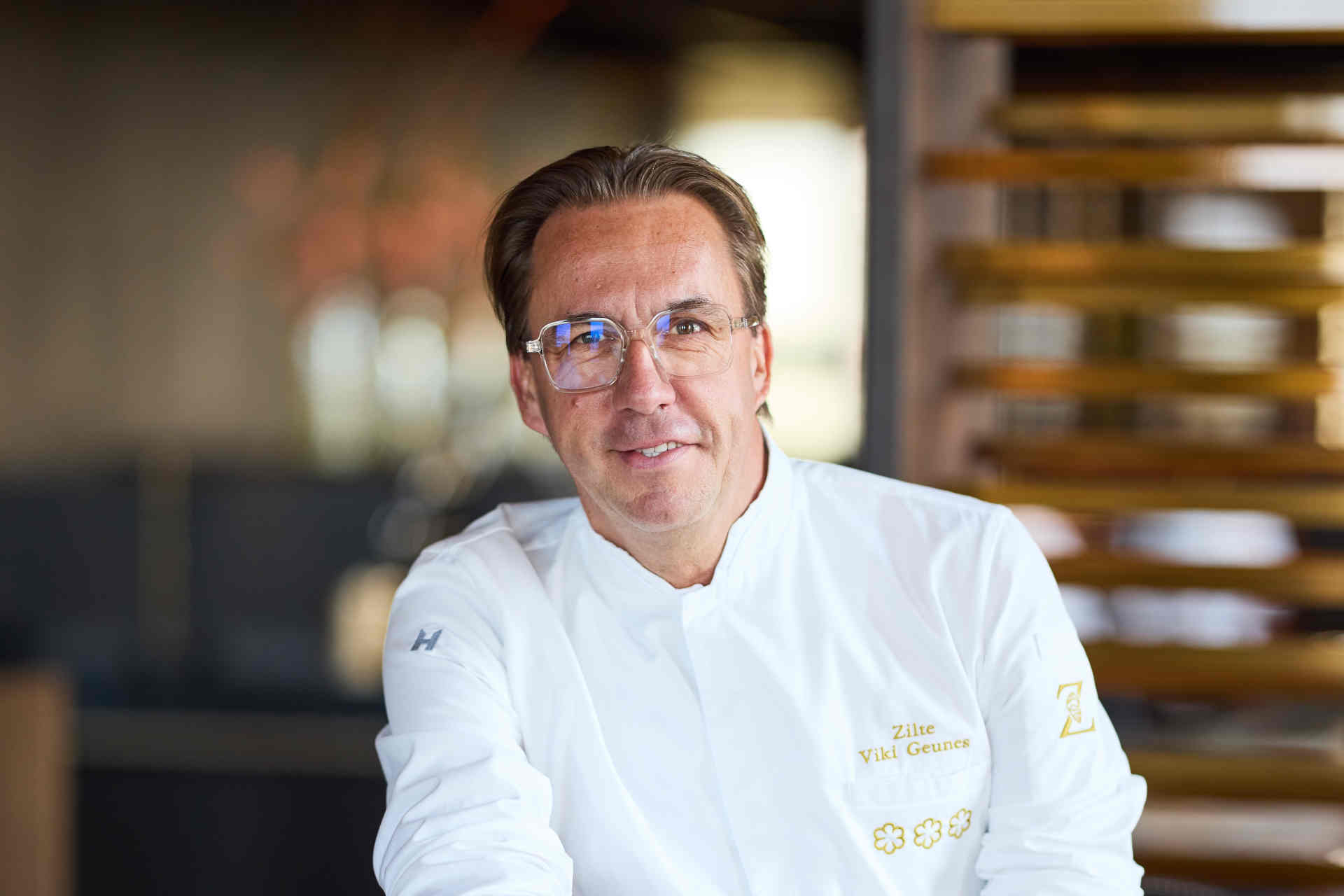
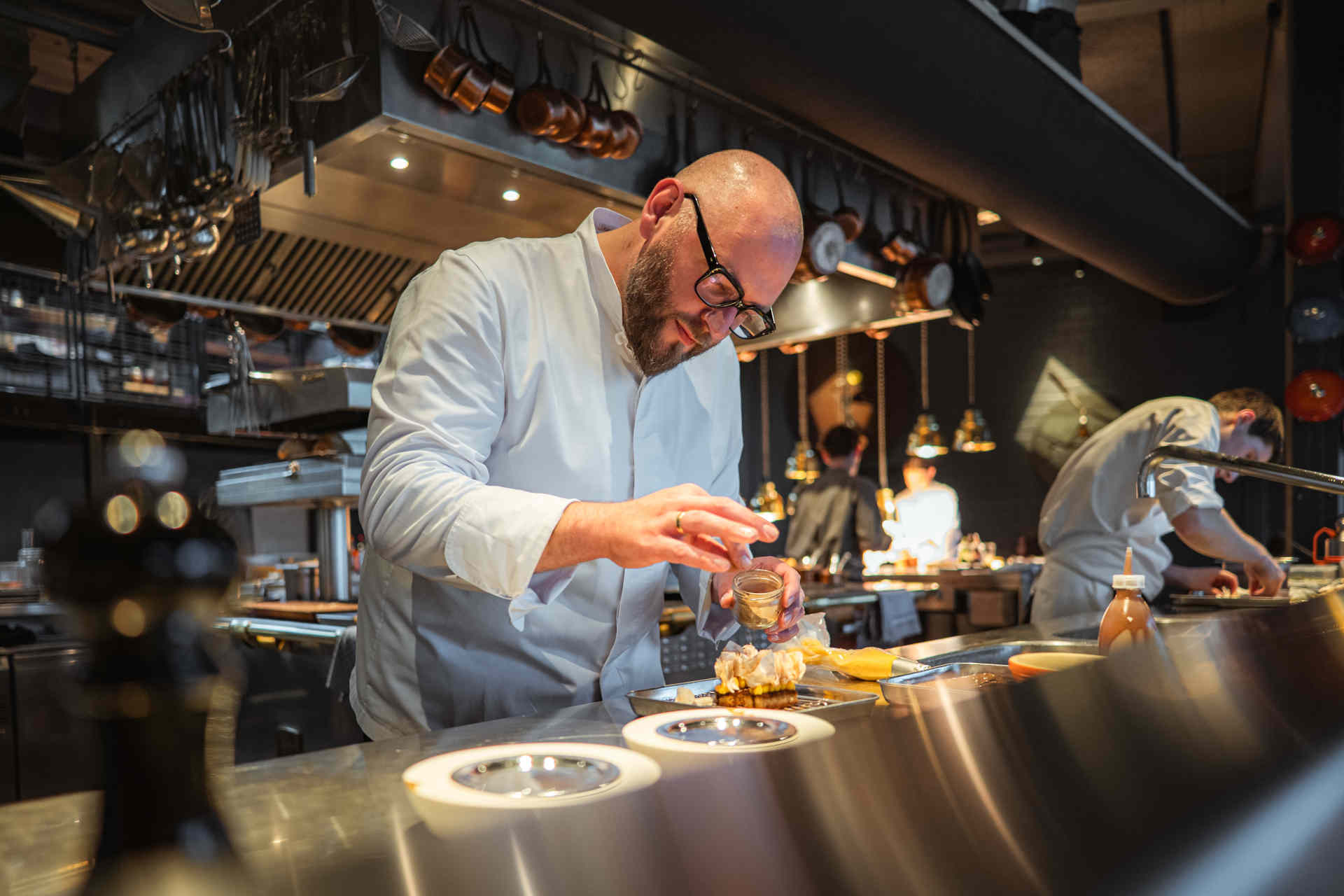
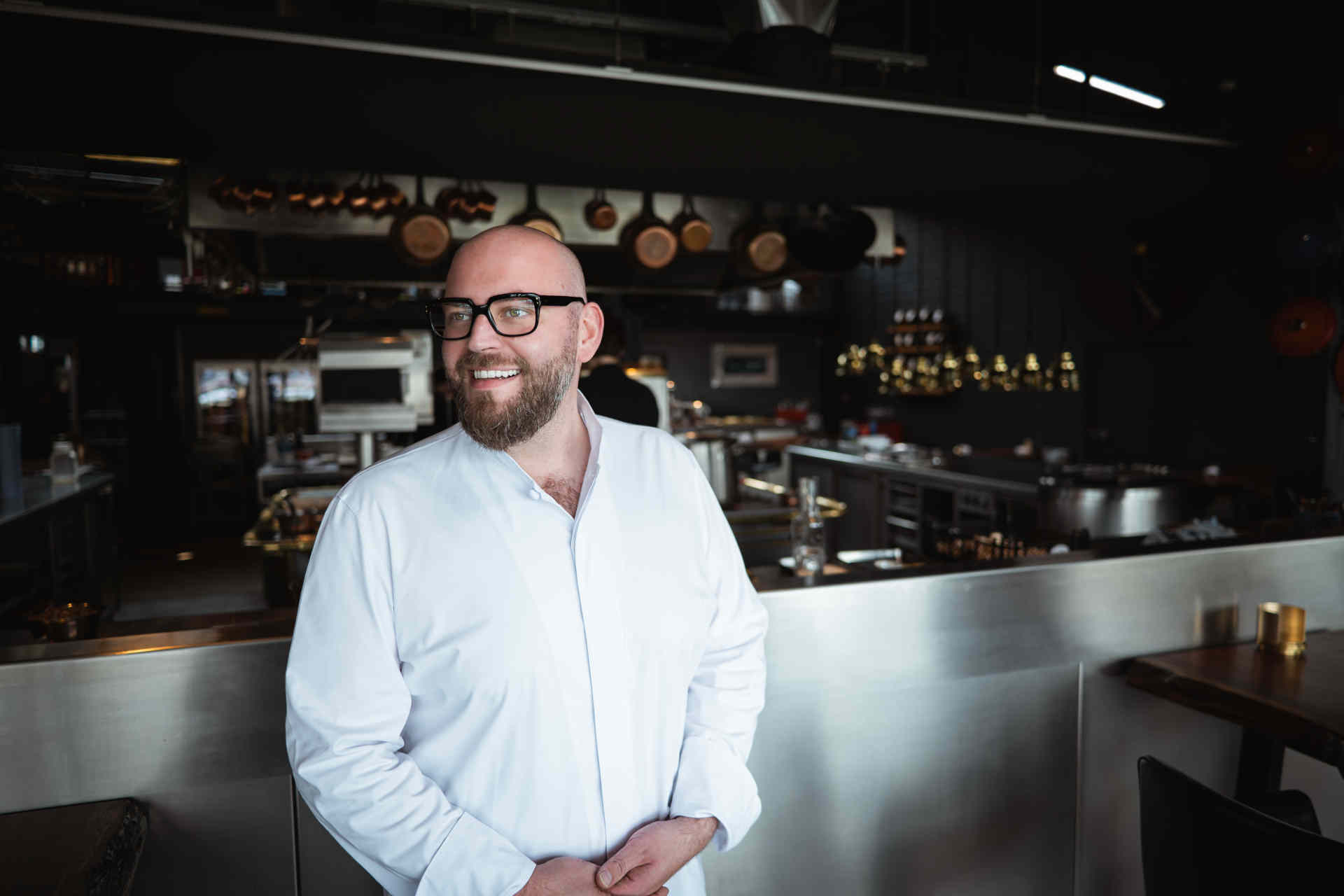
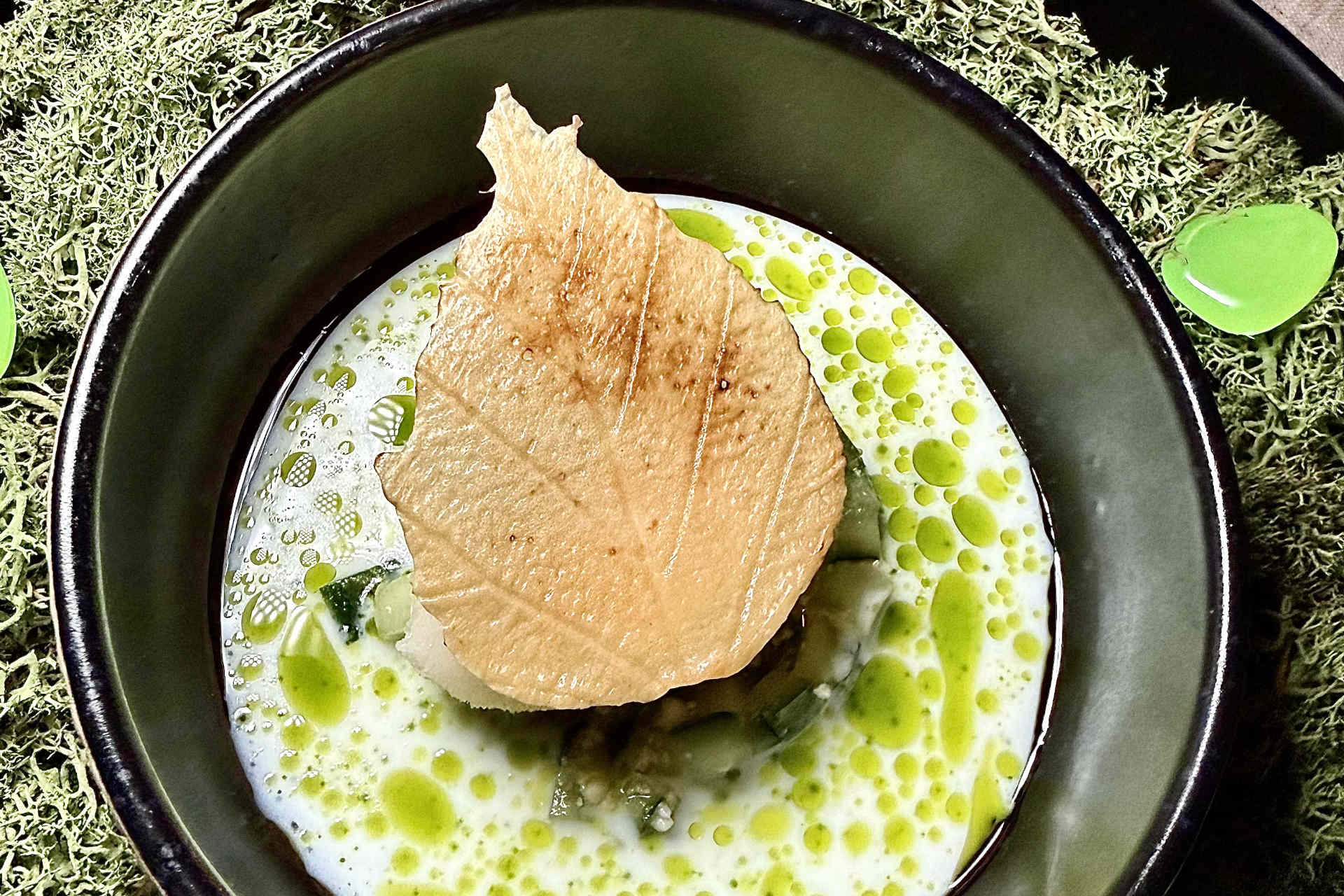
Viki Geunes is the chef and co-founder of the three-Michelin-starred restaurant Zilte, located at the top of the MAS, Museum aan de Stroom, in Antwerp. Trained in industrial science, he entered the world of haute cuisine as a self-taught chef and, over the course of three decades, developed an unmistakable culinary language shaped by international influences. At its heart are exceptional ingredients, precise sauces, complex flavours and a sense of balance that is created less through control than through patience.
From Self-Taught Chef to Three Michelin Stars
Viki Geunes does not speak about cooking in quick sound bites. He thinks in processes, in development, in balance and in that elusive moment when the individual components of a dish suddenly come together as a coherent whole. Perhaps that is hardly surprising for a chef who did not follow the traditional route into haute cuisine. Geunes studied industrial science before opening the restaurant Zilte in Mol, Belgium, together with his wife Viviane Plaquet.
As an autodidact, he taught himself the techniques, knowledge and culinary precision required to build his own distinctive style. The restaurant received its first Michelin star in 2004, followed by a second in 2008. In 2009, Geunes was named “Chef of the Year” by Gault&Millau. In 2011, the restaurant moved to the top floor of the MAS in Antwerp. Following an extensive redesign and a move to the opposite side of the building, Zilte was awarded its third Michelin star in 2021. Today, the restaurant is regarded as one of Belgium’s outstanding culinary destinations. The Michelin Guide particularly highlights Geunes’ exceptional product quality, technical precision, nuanced use of textures and the depth of his sauces.
In conversation, Viki Geunes explains why great cuisine needs time, why intuition remains fallible even after 30 years and how discipline, craftsmanship and creative freedom merge into an unmistakable culinary language.
Restaurant Zilte
© Kris Vlegels
Restaurant Zilte
© Kris Vlegels
Restaurant Zilte
© Kris Vlegels
Restaurant Zilte
© Marjorie Romeijn
Restaurant Zilte
© Kris Vlegels
Restaurant Zilte
© Marjorie Romeijn
Viki Geunes on Developing a Zilte Dish
Your cuisine is known for precision, purity and balance. What happens in the space between control and intuition when you create a dish?
It’s not so much control as it is patience. My intuition plays a huge role in the composition of a dish, but there’s still a research and development process for each dish, and that requires a lot of patience. I think the refusal to rush, the commitment to dedicating enough time to each dish, is what gives that overall feeling of balance and precision.
You often begin with a clear vision of the finished plate and work backwards. At what point does an idea stop being a concept and become a true Zilte dish?
That point comes when the dish goes on the menu after the rigorous development process I mentioned before. Until then, every element can be still refined, changed, removed. But eventually, that moment when everything slots together, I get a sense of harmony, and that’s when a dish is ready, it becomes a Zilte dish.
Time plays a decisive role in cooking through ageing, fermenting, resting, reducing and waiting. How do you use time as an ingredient?
We use time as an ingredient by looking beyond boundaries and discovering new influences. Time gives us the opportunity to learn, experiment and refine our ideas, which ultimately shape our cuisine. Developing a new dish requires patience: sometimes it means taking a step back and letting an idea rest before returning to it with a fresh perspective. You can't rush that process. Time is essential in creating the best possible version of a dish.
In an era of endless techniques and global influences, how do you decide what a dish genuinely needs and what should be left out?
That’s intuition for me. Zilte has been open for 30 years, so I’ve had plenty of time to refine my intuition. That’s not to say that it’s perfect; sometimes I’ll add an element to a dish, taste it, and realise I’ve gone one step too far, it happens. And you need the humility to be able to accept when something doesn’t work and go back. You have to learn to ignore all the noise around, and listen to your gut.
Your cuisine is not defined by one region, yet every chef is shaped by places, people and memories. Which experiences have left the deepest mark on your palate?
India has left one of the deepest marks on my palate. Its incredible diversity of spices and staple ingredients continues to inspire me. I’m fascinated by the way spices can add depth, balance and complexity to a dish without overpowering its essence. These flavours and techniques often find their way into my cuisine, not as direct references, but as starting points for new creations and unexpected combinations.
The name Zilte evokes salt, the sea and the oyster that inspired it. What does salinity represent in your cuisine today?
For me, salinity represents neutrality. It creates a sense of balance and purity in our cuisine. The sea, on the other hand, symbolizes infinity – its openness brings a sense of calm and allows the mind to remain curious and receptive to new influences and opportunities. It is a constant source of inspiration, both in what it provides and in the perspective it offers.
You speak of creating “beloved memories”. Can a restaurant consciously design a memory, or can it only create the conditions for one to emerge?
Memories are so personal, we can’t design them as a whole for people. However, we are extremely purposeful with every choice in the restaurant so that we can create the best conditions. We’re thinking about fine tuning the flavours, service, setting, everything we can control, but a memory will be shaped also by the company at the table or your state of mind. Our aim is for the Zilte experience to leave a lasting and memorable impression - the exact shape of it, it’s up to the guest.
“We use time as an ingredient by looking beyond boundaries and discovering new influences.”
Zilte as a Family Story
Zilte is also a family story, shaped together with Viviane, Gitte and Aaron. Where does family end and the restaurant begin, or have the two become inseparable?
The two are inseparable. Of course, there’s family without the restaurant, but there’s no restaurant without the family. Viviane and I have built the restaurant together since day one, and now that Gitte and Aaron are with us, Zilte really is a culmination of our shared vision. We make decisions together, we reason through everything as a team. What’s beautiful is that this foundation goes beyond just the four of us - we include the whole team, and I can see in them the same spirit that we have.
Through Exquis, you bring chefs and winemakers with strong identities into the world of Zilte. What interests you most in these encounters: harmony, contrast or the possibility of creating something entirely new between both sides?
Creating harmony between different cooking styles is what makes Exquis unique. It’s about finding common ground between two chefs who share the same mindset and level of craftsmanship, while bringing their individual identities to the table. When that harmony is achieved, it creates something new and meaningful that neither could have created alone.
Michelin describes your cooking as art. Do you see gastronomy as art, craft, discipline or something that exists somewhere in between?
I see it as a combination of the three. For me, the foundation of what I do is discipline and consistency. Cooking is craft precisely because of this discipline; it’s a willingness to keep refining and tweaking until the dish is right. This has to be in place before I can start thinking about the artistry I’m trying to achieve. Once you’ve committed to that method of working, you can play endlessly. Of course it’s art, it’s like painting - there’s texture, colour, flavour.
A dish disappears, a season changes and no evening can ever be repeated in exactly the same way. Does this transience make gastronomy more meaningful to you?
Absolutely. That transience is part of what makes the memories so special; the knowledge that they can never be perfectly repeated. It pushes us to seek perfection because we know we only have one shot at getting that particular moment right for the guest.
© Kris Vlegels
© Kris Vlegels
About Viki Geunes
Viki Geunes is a Belgian three-Michelin-starred chef and a self-taught culinary artist. Before dedicating himself to gastronomy, he trained in industrial science.
Together with his wife Viviane Plaquet, who is the restaurant’s hostess, he opened Zilte in Mol and developed his own culinary signature over many years. Their daughter, Gitte Geunes, works in the front of house, while her partner Aaron Moeraert oversees the wine programme as Head Sommelier.
Zilte is therefore not only the work of one chef, but the expression of a shared family and culinary vision.
Awards
First Michelin star: 2004
Second Michelin star: 2008
Gault&Millau “Chef of the Year”: 2009
Third Michelin star for Zilte: 2021
Gault&Millau: 18.5 out of 20 points according to the restaurant profile
Restaurant Zilte at a Glance
Restaurant: Zilte
Chef: Viki Geunes
Culinary style: Creative, internationally inspired haute cuisine
Michelin: Three stars
Address: Hanzestedenplaats 5, 2000 Antwerp, Belgium
Location: Top floor of the MAS, Museum aan de Stroom
Closing days: Saturday and Sunday
Reservations: Advance booking is recommended
The currently published service hours are Monday to Friday, with lunch served between 12:00 and 1:00 pm and dinner arrivals between 7:00 and 8:30 pm. As opening hours may change, guests should confirm them directly with the restaurant before visiting.