100/200 Kitchen & GLORIE
Two Michelin-starred restaurants, one kitchen and two completely different ways to enjoy a meal
28 October 2026 · Alexandra Gorsche
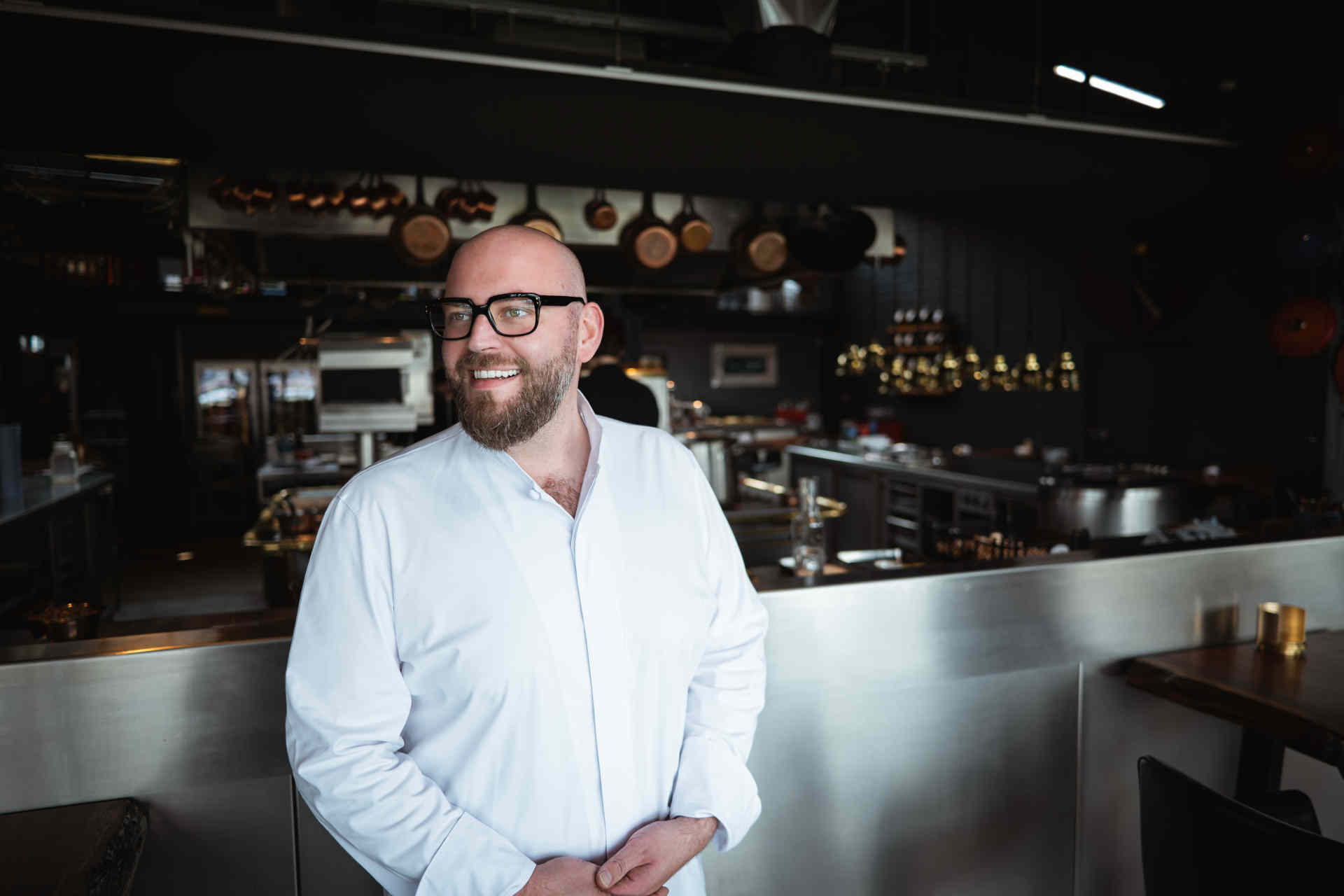
Three Michelin stars under one roof, but not a three-star restaurant: on Hamburg’s Brandshofer Deich, Thomas Imbusch and Sophie Lehmann run two independent restaurants in the same venue – the 100/200 Kitchen and GLORIE. Downstairs, guests relinquish control; upstairs, they regain it. What unites the two are the cuisine, the ingredients and an ethos that extends far beyond the plate.
Two completely different dining experiences
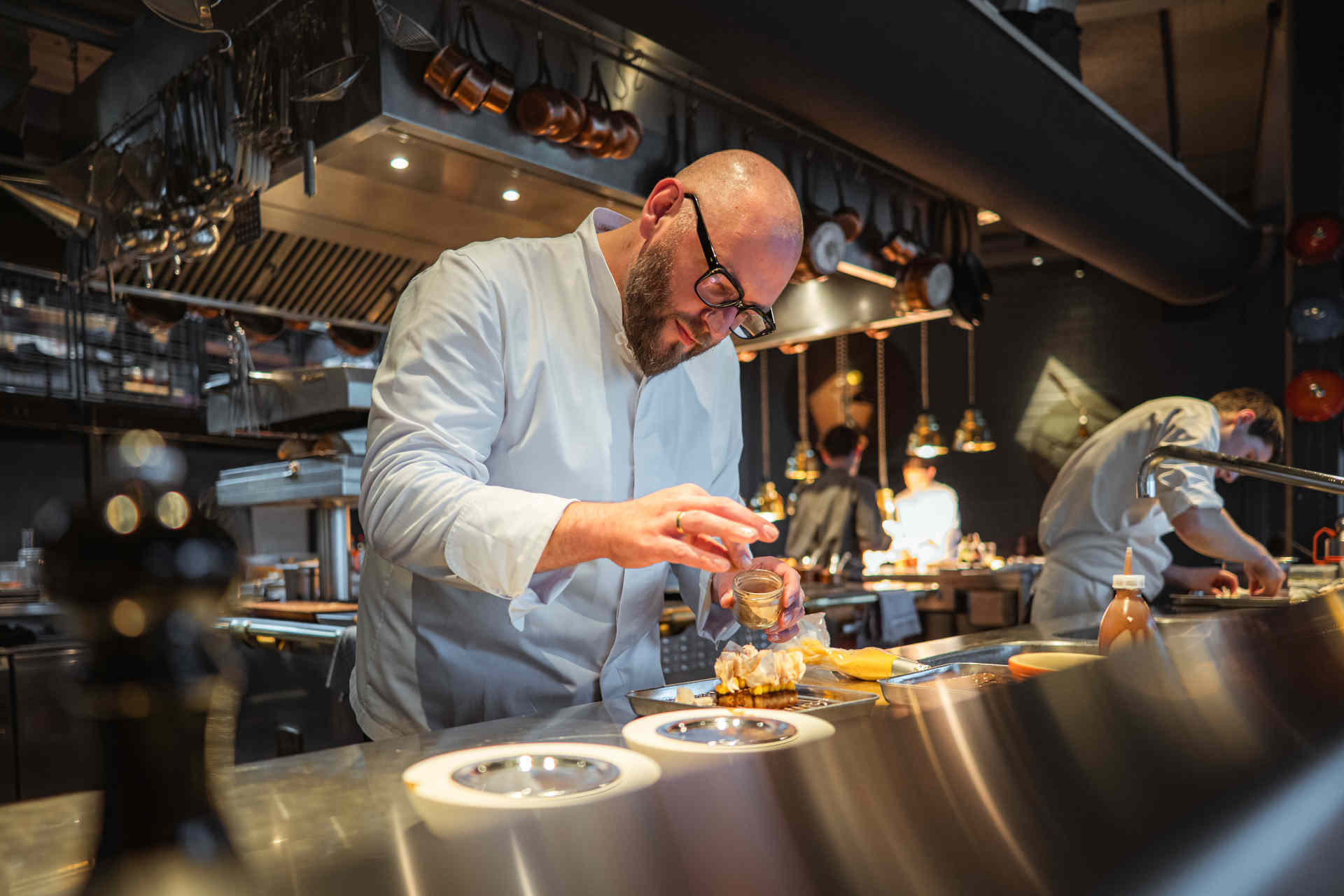
In fact, the concept can be explained with a single gesture: you either look down or you look up. Down below stands the large Molteni stove in the centre of the room. All around it, the kitchen of the 100/200 Kitchen – awarded two Michelin stars – is hard at work. There are no hidden preparation areas, nor any traditional boundary between the kitchen and the dining area. Above it, on a mezzanine, lies GLORIE, which has held a Michelin star since 2026. From there, you look down onto the very same open kitchen from which your own dishes are prepared.
So, two restaurants. The same people. The same ingredients. The same kitchen. And yet two fundamentally different dining experiences. This is no coincidence, but has long been part of Thomas Imbusch’s vision. “For me, it was absolutely, absolutely vital: I definitely wanted to have two types of restaurant concept.” It took years for this to become a reality. The 100/200 opened in 2018; according to Imbusch, it took around five years before the à la carte concept could be realised in the desired form.
Below: Trust rather than choice
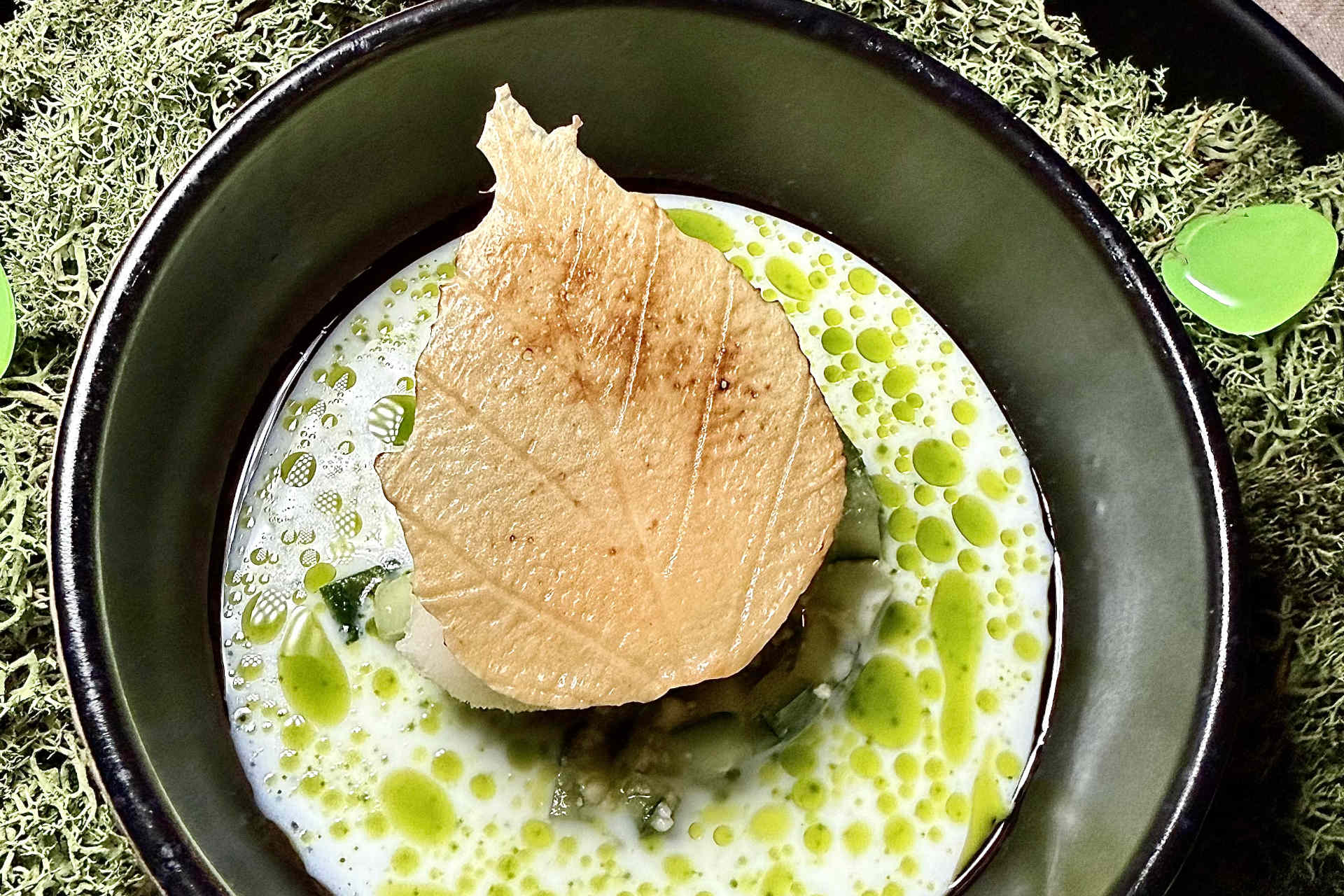
The 100/200 Kitchen is the more radical of the two options. Here, it is not a question of selecting the supposedly best dish from an extensive menu. The guest allows themselves to be guided. The restaurant operates on a ‘carte blanche’ basis, or with set menu formats; the specific composition depends on what nature and the producers have to offer at any given time. The menu for our visit is entitled ‘The 2026 Season’. The sequence alone shows that Imbusch thinks less in terms of classic luxury ingredients and more in terms of flavour, produce and excitement: Tomato | Beetroot | Rose, Poverade | Tomato | Parmesan, beans & bread, pasta without tomato sauce, cheese toast with mushrooms and, finally, blackberry | brown butter | violets.
Before that come sourdough bread and yoghurt butter with rosemary, chives and chilli. Even vegetables and small accompaniments are interpreted through the lens of sweetness, acidity, saltiness, bitterness and umami. Beneath this is a sentence that almost serves as a commentary on the entire concept: ‘Complexity lies in simplicity.’
What makes 100/200 so special?
Even the name is a statement against a trend that Imbusch has observed in haute cuisine. After years in professional kitchens, he became increasingly bothered by what he saw as an overly technical approach to cooking. In conversation, he speaks of his scepticism towards a style of cooking that confuses temperature precision with culinary quality. His counter-argument is deliberately basic: water boils at 100 degrees, the oven runs at 200 degrees.
That’s how 100/200 came about.
Restaurant 100/200 Kitchen in Hamburg
© Rene Flindt
Restaurant 100/200 Kitchen in Hamburg
© Rene Flindt
Restaurant 100/200 Kitchen in Hamburg
© Rene Flindt
A kitchen without a backstage area
Anyone who steps into the 100/200 quickly realises that here, food and work are brought into the open. Imbusch describes the restaurant as a ‘turned-inside-out’ restaurant kitchen. The craft process itself becomes part of the design. There is no traditional back-of-house area; much of what would otherwise disappear behind closed doors takes place in full view of the guests. The kitchen brigade also takes on tasks that elsewhere would be strictly the preserve of the front-of-house staff. This is architecturally spectacular, but even more interesting in substance: here, the open kitchen does not become a theatre where guests are allowed to watch chefs plating up. It presents catering as work. Fire, hand movements, communication, rhythm, correcting mistakes – all of this is part of the evening.
Above: GLORIE and the return of freedom of choice
Just a few metres away, yet conceptually on the other side, lies GLORIE. Here, guests regain what they deliberately relinquished downstairs: the power of choice. GLORIE is an à la carte restaurant. The cuisine is classically inspired, without being old-fashioned. The restaurant itself describes its approach as classic craftsmanship, interpreted in a modern and timeless way. The menu features oysters as well as consommé, caviar and crème fraîche, an Angus beef pâté in pastry, stuffed penne, artichokes cooked in their husks, sole à la bordelaise, half a Heligoland lobster Thermidor, or various cuts of beef.
A cheese toastie brings both worlds together
This is particularly well illustrated by a dish that links the two restaurants: the cheese toastie. At GLORIE, it is explicitly listed on the menu as ‘Cheese Toastie 2018, our signature dish’. At 100/200, it appears on the menu as “Cheese toast with mushrooms”. The story behind its creation says a lot about Imbusch’s way of thinking. Originally, he wanted to recreate that perfect moment after the main course – when a matured cheese is served – which classic fine-dining restaurants celebrate with large cheese trolleys. But here’s the thing: a high-quality cheese trolley costs money, as does the cheese itself, and Imbusch and Lehmann are independent entrepreneurs without an investor to simply absorb any losses. So economic reality gave rise to a culinary idea. Today, toasted bread meets matured cheese and mushrooms. And even this dish is still not ‘finished’ after eight years. “There’s always room for improvement.” For Imbusch, it’s less about presentation and more about “eatability”: size, texture, mouthfeel and the question of just how pleasant a dish actually is to eat. An intriguing approach: here, innovation means not constantly inventing something new, but making the same thing better over the course of eight years.
GLORIE Restaurant in Hamburg
© Rene Flindt
GLORIE Restaurant in Hamburg
© Rene Flindt
Sophie Lehmann and Thomas Imbusch
© Rene Flindt
Farm to Table since 1885
At GLORIE, one sentence features prominently on the menu: “A strong link between yesterday and today. Farm to table, quite simply. Since 1885.” The historical reference is to the Brandshofer Deich, where food and agricultural produce have long been part of the local history. Today, Lehmann and Imbusch see regionality primarily as a relationship with producers and food. The Michelin Guide also highlights the 100/200’s responsible approach to produce, its small-scale producers whom the team know personally, and the comprehensive use of ingredients. And Imbusch sees his role as even broader: as a “voice between producer and guest”. This also explains why vegetables at the 100/200 are not treated as a meat-free alternative. The crucial question is not: ‘Where is the luxury product?’, but rather: ‘What can this product do?’
A restaurant is more than just food
Anyone who focuses solely on the stars may overlook the most interesting aspects. At 100/200, the music is also curated. Each menu comes with its own playlist. Imbusch’s wife and business partner, Sophie Lehmann, has a classical musical background; Imbusch himself learnt to play the drums. Music is intended to help shape the pace, tension and emotion of the evening. To this end, the restaurant has even invested in concert-hall-standard technology. Nor does Imbusch regard acoustics, lighting, cutlery, crockery, seating comfort or surfaces as mere details. After all, guests rarely remember why a space felt just right. They simply remember that it did.
Two restaurants, one space
Perhaps the cleverest aspect of this dual concept is the consistency with which the same philosophy is translated into two different forms.
At 100/200, the message is: Trust us.
At GLORIE, it is: Decide for yourself.
One offers a set menu, the other à la carte. One takes the lead, the other lets you choose. One focuses more on the seasonal moment, the other works with classics and culinary memories. And yet they do not compete with one another. The restaurant itself puts it remarkably clearly: ‘Two restaurants. Two experiences. One philosophy.’
On Brandshofer Deich, this has now evolved into something else entirely: an example of how modern haute cuisine does not necessarily have to perfect a single concept. Sometimes, the same conviction can underpin two completely different restaurants.