Madeira’s Wild Side
Vineyards, Levadas, and the North Coast
29 October 2026 · Alexandra Gorsche
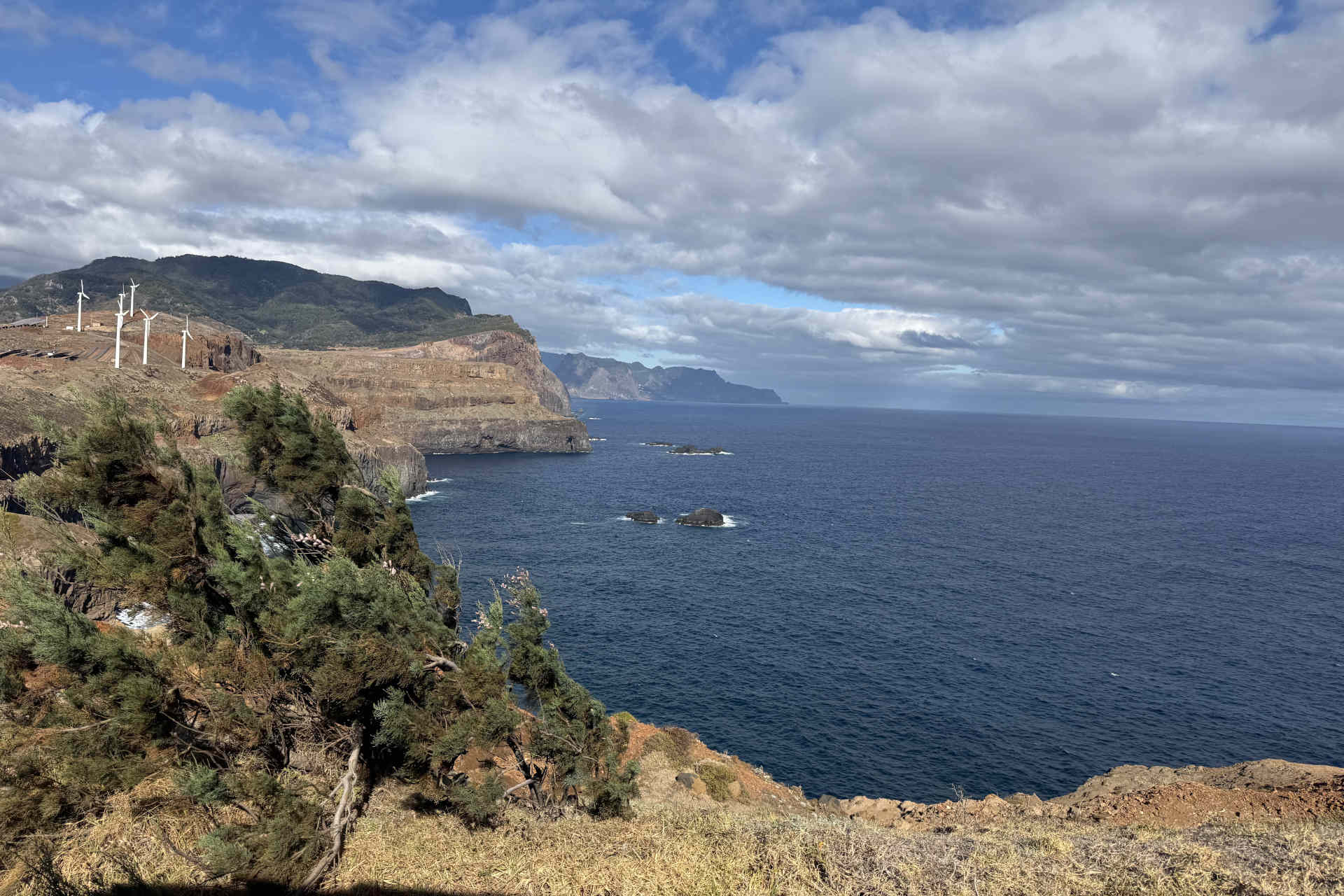
Funchal shows Madeira's elegant side. Yet the island often tells its most captivating stories outside the city: in the vineyards, along the wild north coast, beside historic levadas, and in places where sugarcane, thatched-roof houses, and sheer cliffs still reveal so much about Madeira’s heritage and way of life.
Leaving Funchal Behind, Heading into the Real Madeira
Funchal is Madeira’s elegant calling card. But at some point, you simply have to get in the car and drive. Because outside the capital, Madeira suddenly becomes wilder. Roads snake through mountains, vegetation grows denser, houses cling to hillsides, and just around the next bend, the Atlantic reappears. And that is precisely where, for me, a second side of the island begins. One you don’t merely look at, but truly experience.
My Madeira Moment: Barefoot in the Midst of the Grape Harvest
There are wine tastings. And then there are experiences after which you truly look at wine a little differently. During our Harvest Experience at Blandy's Quinta do Bispo in São Jorge, we plunged right into the grape harvest, including traditional grape treading with bare feet. Standing barefoot in crushed grapes might sound a bit folkloric at first. But once you're actually there, among the vineyards and the people who share their traditions with such natural ease, it feels completely different. You suddenly understand how intimately Madeira wine is tied to this landscape. Steep slopes. Terraces. Hand labor. Climate. And above all, people.
What stayed with me most was the warmth with which we were welcomed. Not like spectators at a staged show, but almost like friends invited to be part of things for a few hours. That’s precisely why my tip is: Visit a winery. Don’t just attend a tasting. Walk among the vines. Ask questions. See how work is done on Madeira. Only then do you truly understand Madeira wine. To wrap up our visit, we enjoyed a traditional lunch featuring Espetada, the famous Madeiran meat skewer. Traditionally, the beef is skewered on bay laurel wood and grilled over an open charcoal fire. The laurel imparts a delicate, aromatic seasoning.
Vineyard, fire, food, people. You could hardly pack more Madeira into a single afternoon.
© Genusspunkt
© Genusspunkt
© Genusspunkt
© Genusspunkt
© Genusspunkt
© Genusspunkt
© Genusspunkt
© Genusspunkt
© Genusspunkt
© Genusspunkt
By Jeep into the Northeast
Another recommendation: A jeep tour. Ours took us through the northeast of Madeira, and the drive alone is part of the adventure. Here, the island reveals yet another completely different face. Lush green. Steep slopes. Narrow roads. Atlantic. Mist. Sunshine. Sometimes all within a single hour. Madeira looks compact on a map. But as soon as you're on the road, you realize just how many diverse landscapes are packed into this small island.
© Genusspunkt
© Genusspunkt
Quinta do Furão: A View to Remember!
One of our stops was Quinta do Furão near Santana. And honestly: the location is spectacular. High above the coast, lush greenery meets dramatic cliffs and the deep blue Atlantic. It’s one of those places where you simply lose track of time.
Our culinary tip: the homemade sweet potato bread paired with a glass of wine. Sometimes, you don’t need anything more.
© Genusspunkt
© Genusspunkt
© Genusspunkt
© Genusspunkt
© Genusspunkt
© Genusspunkt
Levadas: Understanding Madeira Along the Waterways
And then there’s something that shouldn’t be missing from any first trip to Madeira: a levada hike.
Levadas are historic irrigation channels built to transport water from the rainy mountain regions to the drier parts of the island. Today, hiking trails run along many of these waterways through laurel forests, gorges, tunnels, and spectacular mountain landscapes. Eingefügter Text What’s so fascinating is that you’re following a centuries-old system that was vital for Madeira’s agriculture and settlement. Depending on the route, you’ll find easy walks as well as more demanding treks with narrow passages, tunnels, and elevation changes. So: sturdy footwear is a must. And depending on the trail, a headlamp definitely belongs in your backpack.
GENUSSPUNKT Tip: Anyone visiting Madeira for the first time should plan at least one levada hike.
© Genusspunkt
© Genusspunkt
Santana: These Houses Are Much More Than a Photo Op
The small, triangular houses with their low-sloping thatched roofs are among the island’s most iconic motifs. Naturally, they are photogenic. But they only become truly interesting once you understand why they were built this way. The traditional Casas de Santana were made of wood and straw—materials that were readily available and comparatively inexpensive on the island. Their roofs are extremely steep, sometimes reaching almost to the ground. This allowed rainwater to run off quickly and prevented it from penetrating the thatch. At the same time, the construction helped regulate indoor temperatures. The attic space was historically used, among other things, to store agricultural produce and grain. We were especially lucky on our trip. We weren't just shown one of the well-known showcase houses, but an authentic home where the owner’s grandfather had still lived not so long ago. And at that moment, your perspective shifts completely. You are no longer looking at a tourist attraction, but standing right in the midst of a way of life. So: definitely visit, but please, not just for the photo.
© Genusspunkt
© Genusspunkt
© Genusspunkt
© Genusspunkt
Sugarcane: Madeira’s Other Liquid Heritage
Almost everyone knows Madeira wine. But the island has a second, remarkably exciting liquid history: sugarcane rum. Historically, sugarcane played a massive role on Madeira. To this day, it forms the basis for the regional Aguardente de Cana and Madeira rum—and, in turn, for Poncha. What makes Madeira rum special is that it is produced directly from fresh sugarcane juice rather than molasses. The juice is fermented and then distilled. There are young, clear varieties as well as rums aged longer in oak. The history behind it is equally fascinating. Sugarcane arrived in Madeira as early as the 15th century, eventually becoming one of the island’s primary economic engines. Sugar turned into proverbial “white gold.” Later, Aguardente de Cana emerged from this sugarcane tradition. Bringing everything full circle to Poncha, as this sugarcane spirit serves as its alcoholic base.
Our tip: Visit a distillery
The same rule applies here as with wine: once you’ve seen where a product comes from and how it is crafted, you’ll taste it with new appreciation. Madeira rum isn’t just rum. It is, in a sense, the liquid extension of the sugarcane fields, and a piece of island history in a glass.
© Genusspunkt
© Genusspunkt
© Genusspunkt
© Genusspunkt
Madeira Can’t Be Defined by a Single Landscape
And that’s what makes the island so special: on the very same day, you can stand among grapevines, drive through dense forest, hike along a levada, find yourself enveloped in mountain mist, and just a few hours later sit in the sunshine overlooking the Atlantic. And each time, it feels as if someone has swapped out the entire backdrop.
That is why our most important tip for the north is: Don’t just plan destinations. Appreciate the journey between them. Because on Madeira, the drive isn’t just how you get to the next itinerary item. Very often, it is the experience itself.
Our Verdict
Funchal makes it easy to love Madeira. But it's in the vineyards, along the levadas, in Santana, and on the north coast that you begin to understand what makes the island so special. Here, nature and agriculture, tradition and everyday life are in constant dialogue. And perhaps that’s why so much lingers in the memory. Not just images. But scents, people, flavors, and that thrill of knowing that around the next bend, something unexpected is waiting for you. Madeira is small on the map. But astonishingly grand in experience.