The Taste of Freedom
Benito Gómez: The two-Michelin-star chef from Ronda who breaks the rules
04 November 2026 · Alexandra Gorsche
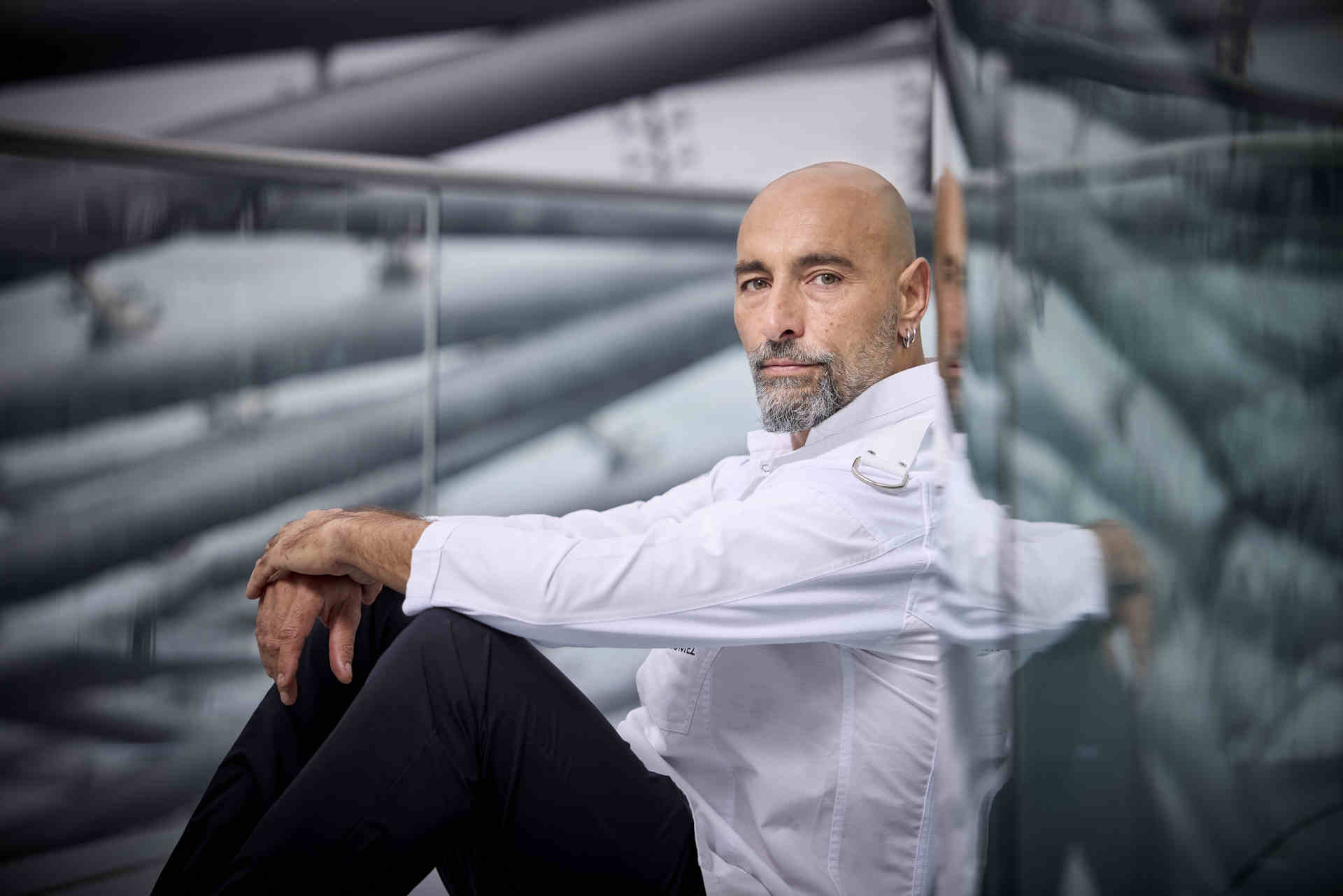
Two Michelin stars, Andalusian roots and a style of cooking that defies convention: Benito Gómez is one of those chefs who prefers to follow his instincts rather than culinary conventions. At the Bardal restaurant in Ronda, he combines uncompromising ingredient quality with artisanal precision, memories and a healthy dose of stubbornness. A portrait of a chef who proves that great cuisine needs no pigeonholing.
A pirate who prefers to follow his heart
He is known as the Andalusian pirate. And indeed, this nickname suits a chef who is reluctant to be told what haute cuisine should look like. Benito Gómez likes to break the rules, challenge conventions and cook with a freedom that is anything but a given in the often strictly structured world of haute cuisine. His cuisine is by no means anarchic. Behind the apparent informality lie almost three decades of experience, technical skill and a remarkable consistency in his approach to working with food. Gómez is driven by a passion that he expresses through his dishes. His culinary signature can therefore hardly be reduced to a single style. It is at once traditional and experimental, rooted in the region yet cosmopolitan, technically sophisticated and surprisingly direct. Gómez breaks the rules and cooks to evoke emotions.
From Barcelona to Ronda: Two culinary worlds, one identity
Benito Gómez was born in Barcelona; his parents are from Andalusia. They ran the Masía Can Raimí restaurant in Argentona, where he was introduced to the world of gastronomy at an early age. Whilst other children formed their first culinary memories around the family dinner table, Gómez grew up, so to speak, amongst the pots and pans of a restaurant kitchen. He was shaped by two distinct culinary cultures: on the one hand, the hearty stews, cured meats and traditional dishes of Catalonia; on the other, the aromatic cuisine of Andalusia, characterised by Mediterranean influences and local produce. At the age of 15, he began his training at the renowned Sant Pol de Mar Hotel Management School. This was followed by stints working with Jean-Luc Figueras, Manolo de la Osa and in the circle of the legendary Ferran Adrià, whose revolutionary approach had a lasting influence on modern Spanish gastronomy.
It was precisely this combination of traditional culinary craftsmanship and avant-garde thinking that became a key foundation of his own style. Eventually, his path led him to Ronda, that Andalusian town spectacularly situated on a rocky plateau, which is now inextricably linked with his name. What began as a professional assignment turned into a lasting connection. Gómez fell in love with the town, its people and the produce of the surrounding area. Today, he describes himself, in essence, as having been born in Barcelona and adopted by Ronda.
The Serranía de Ronda: a culinary treasure trove
At Restaurant Bardal, which Gómez opened in 2016 and which has been awarded two Michelin stars, the Serranía de Ronda serves as the culinary inspiration. This mountainous region in the hinterland of Málaga is characterised by livestock farming, agricultural tradition, wild herbs and a remarkable variety of regional produce. Yet for Gómez, regionality does not mean limiting himself to a geographical radius. Rather, it is a foundation from which he continues to develop his cuisine. Local produce meets Catalan childhood memories, Andalusian seasoning traditions and techniques from the world of haute cuisine.
In doing so, Gómez pursues an interesting alternative to a gastronomy that is often heavily concept-driven: not every dish requires a complicated narrative. Sometimes, an exceptional ingredient – treated with the right knowledge, the necessary care and a keen sense of flavour – is enough. His philosophy can be distilled into a realisation that is as simple as it is sophisticated: it is not the number of techniques that determines the quality of a dish, but their judicious use.
Quisquillas – Swiss chard – Andalusian majado
© Helge Kirchberger Photography
Benito Gómez and Martin Klein
© Helge Kirchberger Photography
Beef tartare – Blanquette – Oscietra caviar – mustard seeds
© Helge Kirchberger Photography
Benito Gómez, guest chef, November 2026
© Helge Kirchberger Photography
Gillardeau oyster – almond – tomato jelly – mole
© Helge Kirchberger Photography
Benito Gómez, guest chef, November 2026
© Helge Kirchberger Photography
Trout ‘Aspic’ – Smoked Crème Fraîche
© Helge Kirchberger Photography
Benito Gómez, guest chef, November 2026
© Helge Kirchberger Photography
Shiitake ‘Frappé’ & Canapé
© Helge Kirchberger Photography
When simplicity becomes the highest art form
In November 2026, Gómez will be appearing as a guest chef at the Ikarus restaurant in Hangar-7 in Salzburg. The menu was a culinary journey blending Andalusian tradition, international influences and surprising flavour contrasts. The opening course – a shiitake frappé – set an unusual tone right from the start. This was followed, amongst other things, by a Gillardeau oyster with almonds, tomato jelly and mole, as well as quisquillas – the small, flavourful prawns from the Spanish coast – served with Swiss chard and Andalusian majado. The majado, in particular, is a fine example of the cultural depth of his cuisine. This traditional Spanish seasoning base is created by crushing and mixing aromatic ingredients such as garlic, herbs, spices or nuts. Its composition varies regionally and depending on the dish. It represents a culinary tradition in which flavour is created through artisanal preparation and the interplay of just a few ingredients.
The monkfish with Andalusian adobo also drew on a classic method: marinating with vinegar, spices and, often, garlic gives fish a distinctive tang and aromatic depth. The exploration of culinary boundaries was particularly fascinating. Whilst mole has its origins in Mexican cuisine, adobo represents a long tradition of Spanish seasoning and marinating techniques. Gómez combines such influences without resorting to ostentatious fusion cuisine. The menu was accompanied exclusively by wines from Spain, a harmonious complement to the chef’s culinary identity.
Kilos of apples for a brief moment
One of the desserts, of all things, demonstrated just how much artisanal effort can lie behind apparent simplicity. An apple tart with vanilla ice cream and Calvados initially sounds like a familiar, almost unspectacular combination. Yet the small, delicate apple tart revealed a whole new dimension of precision. Kilograms of apples were used to create this elaborate dish. The result was a dessert that left an unforgettable impression through the intensity of a familiar flavour. Gómez takes something familiar and works on its texture, concentration and balance until it becomes an extraordinary taste experience. In haute cuisine, simplicity is simply not the opposite of effort. Often, it is the most demanding result of that effort.
For us, a real highlight: the grand finale – a dessert made with mushrooms, coffee and pine nuts. A combination that seemed unusual at first glance, playing on earthy, roasted and nutty flavours. Above all, however, it was a remarkable dramatic conclusion. What had begun with shiitake mushrooms found its culinary conclusion with mushrooms. A thematic thread that not only rounded off the menu but also gave it a special inner logic. For us, it was a dessert we would order again in a heartbeat.
Between Michelin-starred cuisine and tapas
The fact that Gómez does not associate culinary excellence exclusively with fine dining is demonstrated by his second gastronomic venture: Tragatá. The tapas concept, with branches in Ronda and Málaga, takes a decidedly more relaxed approach to gastronomy. Here, the focus is on familiar Spanish dishes, albeit with the same high standards of ingredient quality, technique and precision of flavour as at Bardal. The ensaladilla, the Spanish potato salad, is one of the restaurant’s best-known dishes and has won numerous awards in national competitions. The traditional callos, a hearty tripe stew, are also among the restaurant’s multi-award-winning specialities.
BENITO GÓMEZ
FACTS & FIGURES
Name: Benito Gómez
Background: Born in Barcelona, grew up in Catalonia in a family of restaurateurs with Andalusian roots
Culinary home: Ronda, Andalusia, Spain
Training: Escuela de Hostelería de Sant Pol de Mar
Key career milestones: Jean-Luc Figueras, Manolo de la Osa, La Alquería under Ferran Adrià, and Tragabuches in Ronda
Restaurants: Bardal (Ronda), Tragatá (Ronda and Málaga), Dalmar (Sotogrande)
Bardal: Opened in 2016, awarded two Michelin stars and two Guía Repsol suns
Further accolades: One knife at The Best Chef Awards 2025, ‘Excellent’ category
Culinary style: Contemporary Andalusian cuisine with Catalan influences, an uncompromising focus on ingredients and great creative freedom
Well-known specialities: Callos and the award-winning ensaladilla at Tragatá
Philosophy: Cooking without fixed labels, respecting traditions, questioning rules and trusting one’s own taste
Website: www.restaurantebardal.com
Instagram: @benito_bardal · @restaurantebardal